Skip to content
Tag & Tether

One device at a time · Tracker Reviews

Samsung Galaxy SmartTag2 review

500 stated days, a keyring hole and UWB precision. And one requirement that catches people out at the checkout.

By Mike M.Last updated

#ad — we earn a commission if you buy through the links on this page, at no cost to you. It never changes what we recommend, and the structural reason it cannot is that we recommend the no-subscription devices, which pay the least. Full disclosure.


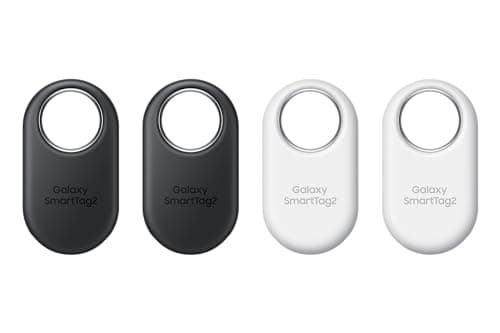
What it is: Samsung's Bluetooth tag, running on SmartThings Find — the Galaxy-only crowd network. The longest battery claim in mainstream item tracking, and the only one of the big three with a hole in it.

The specifications, as Samsung publishes them

BatteryReplaceable CR2032, one cell. Samsung states up to 500 days.
Water and dustIP67, rated based on lab test conditions for submersion in up to 1 meter of freshwater for up to 30 minutes.
BluetoothBLE v5.3, up to 120 m stated range.
UWBPresent, for close-range precision on UWB-enabled Galaxy devices.
Dimensions and weight28.8 × 52.44 × 8.0 mm, 13.75 g.
CompatibilityGalaxy smartphones or tablets with Android 9 or higher; UWB-enabled Galaxy devices for UWB features.
NetworkSmartThings Find — Galaxy devices only.
AttachmentBuilt-in hole.

The requirement that catches people out

This needs a Galaxy phone, not just an Android phone. Samsung states the requirement as Galaxy smartphones or tablets running Android 9 or higher, with UWB features needing a UWB-enabled Galaxy device.

A Pixel, a OnePlus, a Motorola or a Nothing phone cannot set one up, whatever the packaging implies about Android compatibility. It is the most commonly returned purchase in this category.

If you are on non-Samsung Android, buy a Google Find Hub tag instead — those are here.

Three-year cost of ownership

The live price above, plus two CR2032 cells over three years at Samsung's stated 500 days each. Call it the tag price plus two dollars.

No subscription at any tier, no paid features, nothing to decline. Samsung carries SmartThings Find at no charge, and because there is no recurring data cost to recover there is nothing for Samsung to charge for.

Samsung Samsung Galaxy SmartTag2
$52.78View on Amazon

Price as of October 8, 2026. Prices move — Amazon's at checkout is the one that counts.

#ad · we may earn a commission from this link to Samsung Galaxy SmartTag2

No monthly feeSamsung

Samsung Galaxy SmartTag2

Galaxy phone owners

The best tag for a Galaxy owner and useless to anyone else. 500 stated days, a hole for the keyring, and no subscription at any tier.

The subscription reality

No subscription. The only recurring cost is a CR2032 roughly once a year, which is pennies.

Over three years:
about $3 in coin cells

Specs, as published by Samsung

  • Replaceable CR2032; Samsung states up to 500 days
  • IP67 (1 m freshwater up to 30 minutes)
  • Bluetooth LE 5.3, up to 120 m stated range, plus UWB
  • 28.8 x 52.44 x 8.0 mm, 13.75 g

Good

  • 500 days of stated battery life is the longest claim of any mainstream tag
  • No subscription, and SmartThings Find is free
  • UWB gives Samsung phones the same walk-to-it precision iPhones get with AirTag
  • Has a built-in hole, so no holder needed

Not so good

  • Galaxy devices only — Samsung requires a Galaxy phone or tablet on Android 9 or newer
  • SmartThings Find is a smaller network than Apple's Find My
  • Physically the largest of the mainstream tags

Skip it if

your phone is not a Galaxy. A Pixel or a OnePlus will not set this up, whatever the box implies about Android.

What it does better than an AirTag

Battery. 500 stated days against Apple's “more than a year”. Roughly sixteen months, and the longest figure in mainstream item tracking.

Attachment. It has a hole. An AirTag does not, so every AirTag on a keyring is an AirTag plus a three-dollar shell. Small, and genuinely satisfying.

Published specifications. Samsung publishes range, dimensions, weight and Bluetooth version. Apple publishes none of those for the AirTag. That is a difference in disclosure rather than capability, but it is a point in Samsung's favor.

What it does worse

Network size. SmartThings Find includes Galaxy devices only. Apple's Find My is built from essentially every iPhone. Both are large; Apple's is larger, and in a thin crowd that is the difference between a report and silence.

Physical size. At 28.8 × 52.44 × 8.0 mm and 13.75 g it is the largest mainstream tag. On a keyring that is fine; in a wallet it is not, and in a small bag pocket it is noticeable.

Platform lock. Worse than the AirTag's, because it needs Samsung specifically rather than a whole ecosystem. Switch from a Galaxy to a Pixel — not even leaving Android — and your SmartTags stop being useful.

Who should buy it

Galaxy phone owners. It is the best tag for a Galaxy and it is not close: the longest battery, UWB precision on your own hardware, a hole for the keyring, and no subscription.

Who should skip it

Anyone without a Galaxy. Including other Android users. It will not pair. This is the single most important sentence on this page.

Anyone who might leave Samsung. Even a move to another Android phone makes these tags useless. A dual-network Chipolo or Pebblebee survives any platform change.

Anyone tagging a wallet. Too big. Buy a card tracker.

Anyone whose main problem is finding things indoors. Buy the loudest tag you can — Pebblebee states 130 dB and Chipolo about 125 dB — because the alarm does that job, not the map.

The alternatives, named

Chipolo LOOP — works on Find Hub as well as Find My, louder, has a loop, and survives you changing phone. Shorter battery and no UWB.

Motorola Moto Tag — Find Hub with UWB and a replaceable coin cell, so it works on any Android rather than only a Galaxy.

Pebblebee Clip 5 — the loudest option at a stated 130 dB, rechargeable, dual-network. IP66 rather than IP67.
How we picked

We did not lab-test these trackers

Everyone in this category claims to have tested twenty devices. We have not tested any of them, and we say so on every page. What we did instead: read each manufacturer's published specifications and cite them with the date, find the actual subscription price and cite that too, and work out what thirty-six months of ownership costs at those published figures. Device prices come live from Amazon's API and expire after 48 hours rather than going stale. Where a figure could not be sourced to the manufacturer, the page says the spec is unconfirmed rather than borrowing it from a competitor's review. The full method is on the methodology page.

Working out what a tracker really costs? See the three-year cost of every tracker, compared.

Questions

Frequently asked

Does the Samsung SmartTag2 work with any Android phone?
No, and this is the most important thing to know about it. Samsung states the requirement as Galaxy smartphones or tablets running Android 9 or higher, with UWB features needing a UWB-enabled Galaxy device — so a Pixel, OnePlus, Motorola or Nothing phone cannot pair one, whatever the packaging implies. It is the most commonly returned purchase in this category.
How long does the SmartTag2 battery last?
Samsung states up to 500 days on a single replaceable CR2032, which is roughly sixteen months and the longest battery claim in mainstream item tracking — ahead of Apple's 'more than a year' for the AirTag. As with every figure in this category it depends on how often the tag is rung, which is why Samsung states it as an upper bound.
Is the SmartTag2 better than an AirTag?
On the published specifications it wins on battery — 500 stated days against 'more than a year' — and on form factor, because it has a keyring hole where the AirTag needs a holder. The AirTag wins decisively on network size, because Find My is built from essentially every iPhone while SmartThings Find includes Galaxy devices only. Since neither works on the other's platform, the choice is usually made for you.
Does the SmartTag2 need a subscription?
No, none at any tier, and there are no paid features to decline. Samsung carries SmartThings Find at no charge, and because there is no recurring data cost to recover there is nothing to charge for — the same structural reason Apple has never charged for AirTag tracking. Over three years the running cost is two CR2032 cells.
Is the SmartTag2 waterproof?
Water-resistant to IP67, which Samsung states as rated based on lab test conditions for submersion in up to 1 meter of freshwater for up to 30 minutes. That is the same rating as an AirTag. As with any IP rating it is a laboratory figure and water resistance degrades with normal wear, so for a dog collar or anything near water add a sealed case.
What should I buy instead if I do not have a Galaxy?
A Google Find Hub tag: Chipolo's LOOP for the best all-round option on any Android, Motorola's Moto Tag if you want UWB with a replaceable coin cell, or Pebblebee's Clip 5 for the loudest at a stated 130 dB. All three cost nothing to run, and Chipolo and Pebblebee also work on Apple Find My, so they survive a change of platform.

Read next

Where the figures came from

Sources

Every specification and plan price on this page traces to one of these, read on the date shown. Device prices are live from Amazon and stamped separately.

  1. Samsung — Galaxy SmartTag2 specifications — accessed 2026-10-05
  2. Apple — AirTag product page (battery, IP67, Precision Finding) — accessed 2026-10-05
  3. Chipolo — LOOP product page (battery, IP67, 125 dB, 120 m) — accessed 2026-10-05
  4. Pebblebee — Clip 5 product page (12 months per charge, IP66, dual network) — accessed 2026-10-05
  5. Amazon Product Advertising / Creators API — live prices and product images — accessed 2026-10-05