Skip to content
Tag & Tether

One device at a time · Tracker Reviews

AngelSense review

The right tool for a narrow and serious job. Also the one product on this site whose price we cannot tell you, because AngelSense does not publish it.

By Mike M.Last updated

#ad — we earn a commission if you buy through the links on this page, at no cost to you. It never changes what we recommend, and the structural reason it cannot is that we recommend the no-subscription devices, which pay the least. Full disclosure.


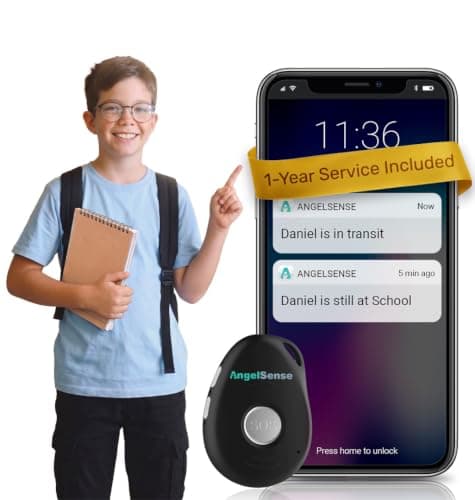
What it is: a cellular GPS tracker designed specifically for a wearer who cannot call for help — a non-verbal child, a child with autism, an adult with dementia. It is not a general-purpose tracker and should not be compared with one.

What makes it different from a consumer tracker

FasteningTamper-resistant, designed so the wearer cannot remove it unaided. This is the single most important difference and the main reason to buy it.
Assistive speakerphoneTwo-way voice, so a situation can often be resolved by talking rather than by traveling.
PurposeBuilt around a wearer who cannot operate a device or summon help, rather than around location sharing.
ServiceRequired. The Amazon bundle includes one year of service in the purchase price.
Activation fee$59 on the month-to-month plan, per AngelSense's own help pages. Reduced on the annual and monthly contract plans.
Plan optionsAnnual (paid upfront), Monthly (with a one-year contract), and Month-to-Month (no contract, cancel anytime).

The price we cannot tell you

This is the unusual part of this review and it is worth stating plainly.

AngelSense does not publish its monthly rate. Its pricing page lists the three plan structures without the figures, directing you to current offers, and its help pages describe the plans and the $59 month-to-month activation fee without stating a monthly price.

We will not print a figure we cannot cite to the company, and we will not take one from a third-party review. So the honest position is: the device is a known quantity, the plan is a quote you will have to request, and you should establish that number before committing.

That is itself a finding. A product whose price you cannot look up is a product you will be negotiating, and for a family already dealing with a difficult situation that is worth knowing in advance.

Three-year cost of ownership

Not computable from published information. What we can say: the Amazon bundle includes year one, years two and three are billed by AngelSense at a rate they will quote you, and the month-to-month route carries a $59 activation fee.

AngelSense AngelSense GPS tracker
$619.00View on Amazon

Price as of October 8, 2026. Prices move — Amazon's at checkout is the one that counts.

#ad · we may earn a commission from this link to AngelSense GPS tracker

Bundled, then paidAngelSense

AngelSense GPS tracker

Non-verbal children and adults; wandering risk

Genuinely purpose-built for a job general trackers fail at. We cannot print a monthly price because AngelSense does not publish one.

The subscription reality

The Amazon bundle includes one year of service; years two and three are billed by AngelSense. AngelSense does not publish its monthly rate on its pricing page — you have to request it — and the month-to-month option carries a $59 activation fee. We will not print a monthly figure we cannot cite.

Specs, as published by AngelSense

  • Purpose-built for non-verbal children and adults with autism or dementia
  • Amazon bundle includes one year of service
  • Assistive speakerphone and a tamper-proof fastening

Good

  • The only device here designed around a wearer who cannot call for help
  • Tamper-resistant fastening that a child cannot remove
  • Live listening and speakerphone are genuinely differentiating for this use

Not so good

  • AngelSense does not publish its monthly rate on its own pricing page — you have to ask
  • A $59 activation fee applies on the month-to-month plan
  • Expensive bundle, and years two and three are billed separately

Skip it if

the wearer can use a phone. A phone with location sharing does most of this for nothing.

Who this is genuinely for

A wearer who cannot call for help. That is the whole specification, and it is a real and narrow one:

  • A non-verbal child, or a child with autism who is at risk of leaving
  • An adult with dementia at risk of wandering
  • Anyone who cannot operate a phone and cannot be relied on to keep a device on

For those situations, almost nothing on a general tracker comparison applies. The requirements are: hard to remove, works away from home, and an alert that reaches somebody who acts. Most consumer trackers fail at least one, and AngelSense is built around all three.

Who this is not for

Anyone who can use a phone. A phone with location sharing does most of this for nothing, on a device they already carry. For a capable older adult or a teenager, this is the wrong product.

A typically-developing older child. A cellular smartwatch is the honest answer: they will keep it on, it adds calls and an SOS button, and the cost is a carrier line rather than a tracker subscription.

Anyone shopping on price. This is the most expensive product in the family category and the one whose ongoing cost you cannot establish in advance.

The requirement that decides whether it works

Somebody has to answer. Every device in this category depends on an alert reaching a person who will act within minutes. A device that notifies three family phones nobody picks up has done its job and achieved nothing.

Decide, concretely and before you buy: who is on that list, in what order, and will they answer at 3am? If the honest answer is “probably not”, a monitored service with a 24/7 response center is the right product and the monitoring subscription is one to pay rather than avoid.

The alternatives, named

SureSafe dementia tracker — calls a list of family contacts directly rather than a monitoring center, which removes one subscription from the chain. One button for the wearer, which is the correct design for this use.

SecuLife medical alert pendant — simpler and lighter, alerting family directly, and working away from the house unlike a home-base alarm. No fall detection on that model.

A cellular smartwatch — for anyone who can manage one. Fall detection, Emergency SOS, and a carrier line rather than a tracker subscription.

A tag in a shoe insole — not a substitute, and a worthwhile second layer at a few dollars. A Bluetooth tag has no SOS and needs passing phones, so it cannot be the plan — but it has helped find people.

The full wandering-risk page covers the requirements in detail, including the non-tracking measures — police registration, telling the neighbors, ID on the person, a door alarm — that have better evidence behind them than any device.
How we picked

We did not lab-test these trackers

Everyone in this category claims to have tested twenty devices. We have not tested any of them, and we say so on every page. What we did instead: read each manufacturer's published specifications and cite them with the date, find the actual subscription price and cite that too, and work out what thirty-six months of ownership costs at those published figures. Device prices come live from Amazon's API and expire after 48 hours rather than going stale. Where a figure could not be sourced to the manufacturer, the page says the spec is unconfirmed rather than borrowing it from a competitor's review. The full method is on the methodology page.

Working out what a tracker really costs? See the three-year cost of every tracker, compared.

Questions

Frequently asked

How much does AngelSense cost per month?
AngelSense does not publish its monthly rate. Its pricing page lists three plan structures — Annual paid upfront, Monthly with a one-year contract, and Month-to-Month with no contract — without the figures, and its help pages describe the plans and a $59 activation fee on the month-to-month option without stating a monthly price. We will not print a figure we cannot cite to the company, so treat the plan as a quote you must request before committing.
Is AngelSense worth it?
For the job it is built for, it is genuinely the right tool: a wearer who cannot call for help needs a tamper-resistant fastening and a fast alert path, and almost no consumer tracker provides either. For anyone who can use a phone, it is the wrong product — a phone with location sharing or a cellular smartwatch does most of it for far less, on a device they will actually carry.
Does the AngelSense Amazon bundle include service?
The listing states that one year of service is included in the purchase price, which is why the bundle price is high relative to other trackers. Years two and three are billed by AngelSense at a rate they will quote you. The month-to-month plan carries a $59 activation fee per AngelSense's own help pages; the annual and monthly contract plans carry a reduced activation fee.
Who is AngelSense designed for?
A wearer who cannot call for help — a non-verbal child, a child with autism at risk of leaving, or an adult with dementia at risk of wandering. The requirements for that situation are narrow: the device must be hard to remove, it must work away from home, and an alert must reach somebody who acts within minutes. AngelSense is built around all three, which most consumer trackers are not.
What is the main thing to check before buying one?
Who answers the alert. Every device in this category depends on a notification reaching a person who will act within minutes, and a device that calls three family phones nobody picks up has done its job and achieved nothing. Decide concretely who is on that list, in what order, and whether they will answer at 3am — and if the honest answer is probably not, a monitored service with a 24/7 response center is the right product instead.

Read next

Where the figures came from

Sources

Every specification and plan price on this page traces to one of these, read on the date shown. Device prices are live from Amazon and stamped separately.

  1. AngelSense — pricing plans explained ($59 activation on month-to-month; rates not published) — accessed 2026-10-05
  2. Amazon Product Advertising / Creators API — live prices and product images — accessed 2026-10-05