Two genuinely different products are sold under this heading, and buying the wrong one is the most common mistake here.
Product one: a safety device for an independent adult. Someone who lives alone, drives, shops, walks — and whose real risk is a fall or a sudden medical event with nobody around. What they need is a way to summon help from wherever they are, and preferably automatic detection if they cannot press anything. Location matters only so that help can arrive.
Product two: a locating device for an adult at risk of wandering. Someone with dementia or significant cognitive impairment, whose real risk is leaving the house and not finding their way back. What is needed is a device that is hard to remove, works away from home, and raises an alert quickly to somebody who will act.
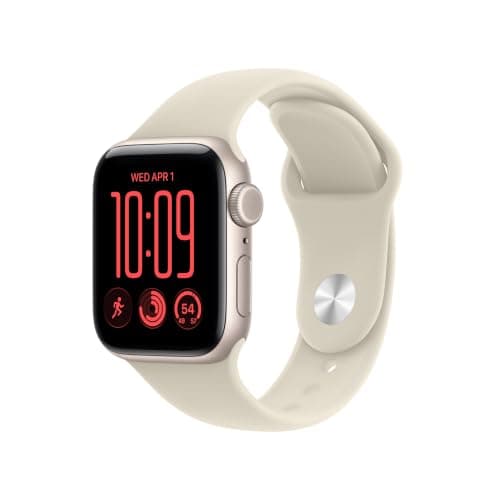
These have different requirements, different form factors and different failure modes. A watch is excellent for the first and poor for the second, because a watch comes off. A tamper-resistant fastened device is right for the second and insulting for the first.
The question that sorts it
Can they use a phone and call for help themselves?
If yes — product one. And start by checking whether their existing phone already does enough: both platforms have built-in emergency SOS and location sharing, which for a capable adult with a phone they always carry is a complete solution costing nothing extra.
If no — product two, and the dementia-specific page covers it properly.
The failure mode nobody mentions
Every device on this page depends on the alert reaching somebody who acts. A device that calls three family phones nobody answers is not a safety net — it is a false sense of one.
Before buying, decide who is on that list and whether they will genuinely pick up at 3am. If the honest answer is nobody reliably, then a monitored service with a 24/7 response center is the right product, and it is a subscription you should pay rather than avoid.
Fall detection, and what it is worth
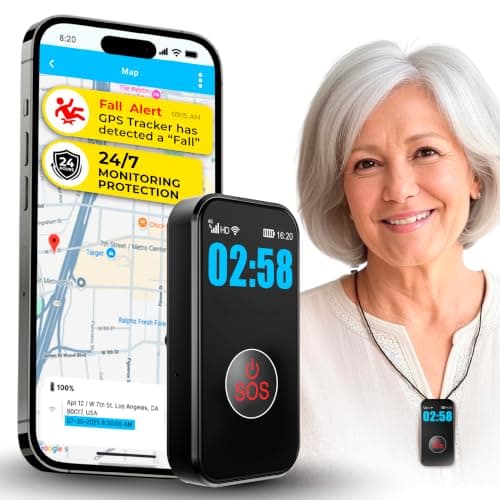
Fall detection is the single most valuable feature for an independent older adult, because the scenario that most often goes badly is a fall where the person cannot reach a phone or press a button. Automatic detection with an escalating alert — a prompt, then a call if there is no response — covers that.
Two honest caveats. Fall detection produces false positives, and an older adult who gets woken by their own watch twice will turn it off. And it misses genuine falls, particularly slow slides to the floor rather than sharp impacts. It is a meaningful improvement in the odds, not a guarantee.
Adherence: the thing to optimize for
Exactly as with children, the best device is the one actually worn, and here the obstacle is different: many older adults decline anything that looks like a medical alarm, because it marks them as frail. That objection is not irrational and arguing with it does not work.
A watch sidesteps it entirely — it is jewelry with functions, and plenty of people wear one who would never wear a pendant. If the person has rejected a medical alarm, a watch is the thing to try next, and the adherence difference usually matters more than any feature comparison.
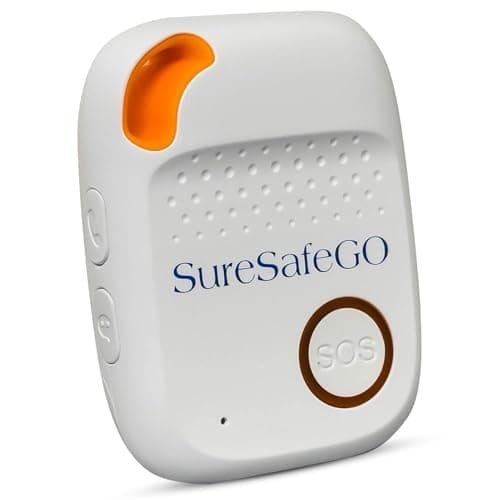
Where a pendant is accepted, prefer one that is small and does not announce itself. Where nothing is accepted, a tracker sewn into a favorite coat is a compromise worth considering — with their knowledge.
Charging, which is where these arrangements fail quietly
A watch needs charging daily or every other day. A cellular pendant needs it every few days. For an independent adult with a routine that is fine; for someone with memory problems it is the thing that breaks.
Practical measures that work: a charging dock beside the bed so it happens at the same time as taking a watch off anyway, and — this is the important one — a low-battery alert that goes to you as well as to them. A device that warns only the wearer is a device that will be flat.
If nobody can reliably manage charging, prioritize the longest-battery device you can find over the one with the best features, and accept the trade.
Cost, and the carrier-line point again
Dedicated elderly trackers need a cellular plan from the tracker company. A smartwatch needs a line from your own carrier, often addable to a family plan for a few dollars a month — cheaper, with no middleman, and it moves with you if you change device.
Check your carrier's wearable pricing before buying anything. For a capable adult it is usually the cheapest route to real-time location plus fall detection plus SOS.
Consent, including with a parent
An adult with capacity gets to decide whether they are tracked, including by their children. Fitting a device to a competent parent without telling them is both a trust problem and, depending on your state and the device, potentially a legal one — statutes like California Penal Code § 637.7 prohibit using an electronic tracking device to determine a person's location or movement, with narrow exceptions.
Where capacity is genuinely in question the picture is different and more complex, and that is a conversation to have with their clinician and, if relevant, whoever holds a power of attorney. We are not able to advise on it, and nothing here is legal advice.