Skip to content
Tag & Tether

Mechanics & law · How Trackers Work

How to find a hidden GPS tracker

Your phone's scan cannot see a cellular tracker. This is the physical search instead — done systematically, because guessing does not work.

By Mike M.Last updated


Scope: this page is for someone who believes a tracker has been placed on their own vehicle or belongings. It covers finding one. We do not provide guidance on tracking people.

First, the thing that decides your method

There are two kinds of tracker and they are found in completely different ways.

Bluetooth tags — AirTags and similar — are found by your phone, free, using the built-in unknown-tracker scan. That is by far the best tool and we cover it here. Start there.

Cellular GPS trackers are invisible to that scan, because they do not broadcast Bluetooth — they talk to a cell tower. No phone scan on either platform will ever see one.

This page is about the second kind.

What you are looking for

A consumer magnetic cellular tracker is roughly the size of a matchbox to a deck of cards, usually black, usually in a hard plastic or rubberized case, and usually held on by a strong magnet. Hardwired units are smaller and have wires going into the vehicle's loom. OBD units plug into the diagnostic port under the dash and are the easiest to spot.

Search the easy places first

The OBD port. Under the dash on the driver's side. A dongle plugged in there is the single most common installation and takes two seconds to check.

Under the car, with a torch. Magnetic units go on flat steel: the chassis rails, inside the wheel arches, behind the bumpers, under the boot floor, on the fuel tank shield. Run a hand along surfaces you cannot see — a magnet is obvious by touch.

The boot. Under the floor panel, in the spare wheel well, inside the side trim, behind the rear light clusters.

The cabin. Under the seats, seat-back pockets, the glovebox, the center console, under floor mats, inside door cards if any are loose.

The short answer

Quick picks

Ranked by what each one costs to own for three years, not by sticker price. The plan column is the one most comparisons leave out.

#ProductBest forPlan / 3 yrPrice
01
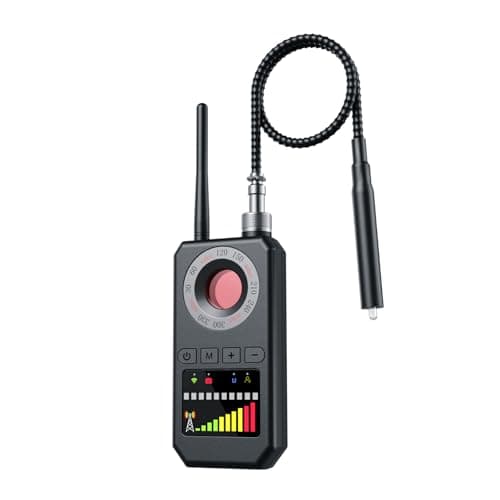
Generic 6-in-1 RF and tracker detector
6-in-1 RF and tracker detector

Finds a cellular tracker while it is transmitting, and its magnet detector genuinely helps under a car. Many trackers sleep when stationary, so a sweep can find nothing.

Useful, with real limitsNo monthly fee

$0

$37.97Amazon

#ad · Live prices from Amazon's product API, as of October 8, 2026. Where we have no verified live price we show none — a gap beats a number that has rotted. Plan figures are the brands' own published rates, cited in Sources below.

In detail

The picks, in full

Generic 6-in-1 RF and tracker detector
$37.97View on Amazon

$49.9824% off

Price as of October 8, 2026. Prices move — Amazon's at checkout is the one that counts.

#ad · we may earn a commission from this link to 6-in-1 RF and tracker detector

Top pickNo monthly fee#01 · Generic

6-in-1 RF and tracker detector

Useful, with real limits

Finds a cellular tracker while it is transmitting, and its magnet detector genuinely helps under a car. Many trackers sleep when stationary, so a sweep can find nothing.

The subscription reality

No subscription, now or later. The purchase price is the whole cost of ownership.

Over three years:
$0

Specs, as published by Generic

  • Sweeps for RF emissions from active transmitters
  • Also detects camera lenses and magnetic fields
  • Handheld, rechargeable

Good

  • Finds a cellular GPS tracker while it is transmitting, which a phone scan will not
  • The magnet detector is genuinely useful for finding a tracker stuck under a car
  • No subscription

Not so good

  • Will not find a Bluetooth tag reliably — your phone's own scan is better at that
  • Cheap RF detectors false-positive on everything from a router to a car key
  • A cellular tracker that is asleep emits nothing to find

Skip it if

you are looking for an AirTag. Use your phone's built-in unknown-tracker scan — it is free, and it is specifically designed for that.

Then search the places that need more effort

Hardwired installs. Look for wiring that does not belong: a pair of wires tapped into the fuse box with a piggyback fuse, or spliced into a loom behind a kick panel. A neat install is hard to spot; an amateur one usually has electrical tape on it.

Behind trim panels. Kick panels, A-pillar trim, under the steering column shroud, behind the glovebox liner. These need tools and patience.

In the engine bay. Less common because of heat, but a weatherproof unit can be zip-tied to a loom or tucked behind a liner.

Inside the rear bumper. A popular spot for magnetic units, because plastic bumpers do not block signal and nobody looks inside them.

On RF detectors, honestly

An RF detector sweeps for radio emissions and can find a cellular tracker — but only while that tracker is actually transmitting.

Here is why that matters. Most cellular trackers sleep when the vehicle is stationary to save battery, waking on motion. So a careful sweep of a parked car can easily find nothing while the tracker is sitting there, asleep.

Two practical implications. Sweep while the vehicle has just been driven, when a motion-woken device is most likely to report. And treat a clean sweep as weak evidence rather than proof — a physical search is more reliable.

Cheap RF detectors also false-positive on almost everything: a router, a phone, a key fob, LED lighting. The genuinely useful feature on these devices is often the magnetic field detector, which finds a magnet-mounted unit under a car regardless of whether it is transmitting.

Signs worth noticing

Unexplained battery drain on a vehicle that previously held charge, which can indicate a hardwired device.

Fresh marks in dust or road grime under the car — a clean rectangle on a dirty chassis rail is worth a second look.

Trim that no longer sits flush, or screws with fresh tool marks.

A piggyback fuse in the fuse box, or wires that do not match the factory loom colors.

If you find one

Do not remove it immediately if you may involve the police. Its position and its presence are evidence, and in some cases its SIM and serial can be traced.

Photograph it in place, from a distance and close up, including any serial or model number. Note where it was. Then contact local law enforcement.

Tracking a person without consent is unlawful in many places — California Penal Code § 637.7, for instance, prohibits using an electronic tracking device to determine a person's location or movement, with exceptions where the registered owner, lessor or lessee consents and for lawful law-enforcement use, and a violation is a misdemeanour. Other states differ. This is not legal advice.

If you believe the person responsible is a partner, former partner or family member, a domestic-violence advocacy organization can help with the situation around the device, which is usually the larger problem. A tracker found is rarely the whole of it, and this is not something to handle alone.

If you cannot find anything but still believe you are being followed

Consider that location can leak without any hardware at all: shared location on a phone, a family-sharing account, a connected-car app, a shared cloud account, or a vehicle's own built-in telematics.

Those are often more likely than a physical device, and they are worth checking: the sharing settings on your phone, who has access to your accounts, and whether a connected-car app is paired to somebody else's login. A professional sweep is also an option for a vehicle you genuinely cannot clear yourself.
Questions

Frequently asked

How do I find a hidden GPS tracker on my car?
Start with the easy places: the OBD port under the dash, then under the car with a torch and a hand run along the chassis rails, wheel arches and inside the bumpers, where magnetic units go on flat steel. Then the boot — under the floor panel, the spare wheel well, the side trim — and the cabin, under seats and inside the glovebox and console. Hardwired units need trim removed and are spotted by wiring that does not match the factory loom.
Can my phone detect a hidden GPS tracker?
No, not a cellular one. Your phone's unknown-tracker scan listens for Bluetooth beacons, and a cellular GPS tracker does not beacon — it talks to a cell tower. So the free scan that is excellent at finding AirTags will never see a magnetic cellular tracker under your car. For Bluetooth tags, use the phone scan; for cellular, you need a physical search.
Do RF detectors work for finding GPS trackers?
Partly, with a real limitation. An RF detector only finds a tracker while it is actually transmitting, and most cellular trackers sleep when the vehicle is stationary to save battery — so a careful sweep of a parked car can find nothing while the tracker sits there asleep. Sweep just after driving, treat a clean result as weak evidence, and note that the genuinely useful feature on these devices is often the magnetic field detector rather than the RF one.
What should I do if I find a tracker on my car?
Do not remove it immediately if you may involve the police — its position and presence are evidence, and in some cases its SIM and serial can be traced. Photograph it in place from a distance and close up, including any serial or model number, note where it was, and contact local law enforcement. Tracking a person without consent is unlawful in many places; California Penal Code § 637.7 is one example, and a violation there is a misdemeanour.
What are the signs of a hardwired tracker?
Wiring that does not belong: a pair of wires tapped into the fuse box with a piggyback fuse, or spliced into a loom behind a kick panel, often with electrical tape on an amateur install. Also unexplained battery drain on a vehicle that previously held charge, trim that no longer sits flush, screws with fresh tool marks, and a clean rectangle in the road grime under the car.
What if I find nothing but still think I am being tracked?
Location can leak without any hardware at all, and those routes are often more likely than a physical device: shared location on your phone, a family-sharing account, a connected-car app paired to someone else's login, a shared cloud account, or the vehicle's own built-in telematics. Check your phone's sharing settings, who has access to your accounts, and the connected-car app. A professional sweep is an option for a vehicle you cannot clear yourself.

Read next

Where the figures came from

Sources

Every specification and plan price on this page traces to one of these, read on the date shown. Device prices are live from Amazon and stamped separately.

  1. California Penal Code § 637.7 — electronic tracking devices — accessed 2026-10-05
  2. Google — unknown tracker alerts on Android — accessed 2026-10-05
  3. Apple Support — if you get an alert that an AirTag or Find My network accessory is with you — accessed 2026-10-05
  4. Amazon Product Advertising / Creators API — live prices and product images — accessed 2026-10-05